News:

SMF - Just Installed!

Main Menu
Menu

Show posts

This section allows you to view all posts made by this member. Note that you can only see posts made in areas you currently have access to.

Show posts Menu

Messages - tuancho

#1


Immaculate Grid is a compact but deceptively rich puzzle format built around a simple premise: a 3×3 grid (or larger) is filled with answers that are linked by shared attributes across rows and columns. The game blends trivia, lateral thinking, and pattern recognition, and it has appeared in print, on websites, and as a recurring segment in online programming. Its accessibility and depth make it popular for parties, classrooms, and casual competitive play.

Core concept and mechanics

The grid (most commonly 3×3) has nine cells. Each cell must be filled with a single word or short phrase.

Players receive nine clues. Each clue corresponds to one cell, but the clues are grouped so that each row and column shares a common theme or connection.

The "immaculate" aspect requires that the grid be filled so that the three entries in each row/column relate in the intended way (e.g., all are types of fruit, all end with the same suffix, or all are connected to a particular person or event).

Variants include giving explicit category headers for rows/columns, providing one clue per row/column and asking for three associated terms, or offering a set of nine related clues where the player must deduce the hidden grouping.

Example (3×3 simplified):

Row A (clued): "Orange, Banana, Apple" → fill with specific fruit names.

Column 1: "Words ending in -ing" → fill with gerunds that also match row clues. This interplay of overlapping constraints is the heart of the challenge.

Styles and formats

Puzzle-print format: Magazines and newspapers sometimes publish static Immaculate Grid puzzles with varying difficulty.

Digital/interactive: Online apps can provide timed modes, hints, and multiplayer leaderboards.

Party/TV segments: Hosts present grids live.
#2


Wordle, the deceptively simple daily word-guessing game that rose to cultural prominence after its 2021 creation by Josh Wardle and subsequent acquisition by The New York Times in 2022, is more than a casual pastime. In roughly 230 characters per day, it illuminates how minimal design, social sharing, and human psychology can combine to create a global phenomenon. This article examines Wordle Nyt mechanics, appeal, criticisms, cultural effects, and implications for digital gaming and attention.

How it works — elegance in constraint

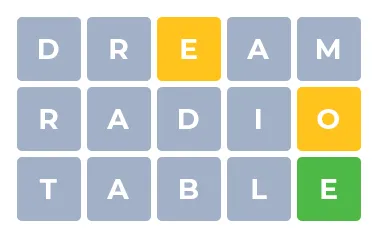
Each day, players have six attempts to guess a five-letter English word. After each guess, tiles change color to indicate correct letters in the right place (green), correct letters in the wrong place (yellow), or incorrect letters (gray). There's one shared answer every day, no ads, and a built-in grid-share that preserves privacy while showing performance. The rules are transparent and the feedback immediate, yielding a satisfying feedback loop.

Why it resonates

Simplicity: The rules are easy to learn. Sessions are short (often under a minute), fitting into commutes or coffee breaks.

Shared experience: A single daily puzzle fosters global simultaneity — everyone solving the same word creates conversation and camaraderie.

Cognitive reward: The puzzle balances accessibility and challenge, triggering dopamine via pattern recognition and incremental progress.

Social mechanics: Copy-pastable emoji grids let players boast without spoilers, turning results into social currency.

Strategies and skill

Wordle mixes deductive logic with vocabulary knowledge. Common strategies:

Start words: Using words with common vowels (e.g., A, E) and consonants (R, S, T, L, N) helps narrow possibilities.

Entropy-based picks: Choosing guesses that maximize information gain by covering diverse letters.

Positional inference: Prioritize confirming vowel placement and eliminating letter permutations.

Skilled players blend pattern reasoning with a mental wordlist and adapt as letters are revealed. Yet luck (the word's rarity) still matters.

Criticisms and limitations

Exclusivity of language: The five-letter-English constraint marginalizes non-native speakers and limits accessibility.

Monotony: Daily uniformity can become repetitive; some players want variant options and longer sessions.

Competitive pressure: The public leaderboard-like sharing can create social pressure and anxiety for perfectionistic players.